


Weekly Spirit of Prophecy Reading
Chapter 24—The Passover
This chapter is based on Exodus 11; 12:1-32.
When the demand for Israel’s release had been first presented to the king of Egypt, the warning of the most terrible of the plagues had been given. Moses was directed to say to Pharaoh, “Thus saith the Lord, Israel is My son, even My first-born: and I say unto thee, Let My son go, that he may serve Me: and if thou refuse to let him go, behold, I will slay thy son, even thy first-born.” Exodus 4:22, 23. Though despised by the Egyptians, the Israelites had been honored by God, in that they were singled out to be the depositaries of His law. In the special blessings and privileges accorded them, they had pre-eminence among the nations, as the first-born son had among brothers.
The judgment of which Egypt had first been warned, was to be the last visited. God is long-suffering and plenteous in mercy. He has a tender care for the beings formed in His image. If the loss of their harvests and their flocks and herds had brought Egypt to repentance, the children would not have been smitten; but the nation had stubbornly resisted the divine command, and now the final blow was about to fall.
Moses had been forbidden, on pain of death, to appear again in Pharaoh’s presence; but a last message from God was to be delivered to the rebellious monarch, and again Moses came before him, with the terrible announcement: “Thus saith the Lord, About midnight will I go out into the midst of Egypt: and all the first-born in the land of Egypt shall die, from the first-born of Pharaoh that sitteth upon his throne, even unto the first-born of the maidservant that is behind the mill; and all the first-born of beasts. And there shall be a great cry throughout all the land of Egypt, such as there was none like it, nor shall be like it any more. But against any of the children of Israel shall not a dog move his tongue, against man or beast: that ye may know how that the Lord doth put a difference between the Egyptians and Israel. And all these thy servants shall come down unto me, and bow down themselves unto me, saying, Get thee out, and all the people that follow thee: and after that I will go out.”
Before the execution of this sentence the Lord through Moses gave direction to the children of Israel concerning their departure from Egypt, and especially for their preservation from the coming judgment. Each family, alone or in connection with others, was to slay a lamb or a kid “without blemish,” and with a bunch of hyssop sprinkle its blood on “the two side posts and on the upper doorpost” of the house, that the destroying angel, coming at midnight, might not enter that dwelling. They were to eat the flesh roasted, with unleavened bread and bitter herbs, at night, as Moses said, “with your loins girded, your shoes on your feet, and your staff in your hand; and ye shall eat it in haste: it is the Lord’s Passover.”
The Lord declared: “I will pass through the land of Egypt this night, and will smite all the first-born in the land of Egypt, both man and beast; and against all the gods of Egypt I will execute judgment.... And the blood shall be to you for a token upon the houses where ye are: and when I see the blood, I will pass over you, and the plague shall not be upon you to destroy you, when I smite the land of Egypt.”
In commemoration of this great deliverance a feast was to be observed yearly by the people of Israel in all future generations. “This day shall be unto you for a memorial; and ye shall keep it a feast to the Lord throughout your generations: ye shall keep it a feast by an ordinance forever.” As they should keep the feast in future years, they were to repeat to their children the story of this great deliverance, as Moses bade them: “Ye shall say, It is the sacrifice of the Lord’s Passover, who passed over the houses of the children of Israel in Egypt, when He smote the Egyptians, and delivered our houses.”
Furthermore, the first-born of both man and beast were to be the Lord’s, to be bought back only by a ransom, in acknowledgment that when the first-born in Egypt perished, that of Israel, though graciously preserved, had been justly exposed to the same doom but for the atoning sacrifice. “All the first-born are Mine,” the Lord declared; “for on the day that I smote all the first-born in the land of Egypt, I hallowed unto Me all the first-born in Israel, both man and beast: Mine they shall be,” Numbers 3:13. After the institution of the tabernacle service the Lord chose unto Himself the tribe of Levi for the work of the sanctuary, instead of the first-born of the people. “They are wholly given unto Me from among the children of Israel,” He said. “Instead of the first-born of all the children of Israel, have I taken them unto Me.” Numbers 8:16. All the people were, however, still required, in acknowledgment of God’s mercy, to pay a redemption price for the first-born son. Numbers 18:15, 16.
The Passover was to be both commemorative and typical, not only pointing back to the deliverance from Egypt, but forward to the greater deliverance which Christ was to accomplish in freeing His people from the bondage of sin. The sacrificial lamb represents “the Lamb of God,” in whom is our only hope of salvation. Says the apostle, “Christ our Passover is sacrificed for us.” 1 Corinthians 5:7. It was not enough that the paschal lamb be slain; its blood must be sprinkled upon the doorposts; so the merits of Christ’s blood must be applied to the soul. We must believe, not only that He died for the world, but that He died for us individually. We must appropriate to ourselves the virtue of the atoning sacrifice.
The hyssop used in sprinkling the blood was the symbol of purification, being thus employed in the cleansing of the leper and of those defiled by contact with the dead. In the psalmist’s prayer also its significance is seen: “Purge me with hyssop, and I shall be clean: wash me, and I shall be whiter than snow.”Psalm 51:7.
The lamb was to be prepared whole, not a bone of it being broken: so not a bone was to be broken of the Lamb of God, who was to die for us. John 19:36. Thus was also represented the completeness of Christ’s sacrifice.
The flesh was to be eaten. It is not enough even that we believe on Christ for the forgiveness of sin; we must by faith be constantly receiving spiritual strength and nourishment from Him through His word. Said Christ, “Except ye eat the flesh of the Son of man, and drink His blood, ye have no life in you. Whoso eateth My flesh, and drinketh My blood, hath eternal life.” John 6:53, 54. And to explain His meaning He said, “The words that I speak unto you, they are spirit, and they are life.” Verse 63. Jesus accepted His Father’s law, wrought out its principles in His life, manifested its spirit, and showed its beneficent power in the heart. Says John, “The Word was made flesh and dwelt among us, (and we beheld His glory, the glory as of the only begotten of the Father,) full of grace and truth.” John 1:14. The followers of Christ must be partakers of His experience. They must receive and assimilate the word of God so that it shall become the motive power of life and action. By the power of Christ they must be changed into His likeness, and reflect the divine attributes. They must eat the flesh and drink the blood of the Son of God, or there is no life in them. The spirit and work of Christ must become the spirit and work of His disciples.
The lamb was to be eaten with bitter herbs, as pointing back to the bitterness of the bondage in Egypt. So when we feed upon Christ, it should be with contrition of heart, because of our sins. The use of unleavened bread also was significant. It was expressly enjoined in the law of the Passover, and as strictly observed by the Jews in their practice, that no leaven should be found in their houses during the feast. In like manner the leaven of sin must be put away from all who would receive life and nourishment from Christ. So Paul writes to the Corinthian church, “Purge out therefore the old leaven, that ye may be a new lump.... For even Christ our Passover is sacrificed for us: therefore let us keep the feast, not with old leaven, neither with the leaven of malice and wickedness; but with the unleavened bread of sincerity and truth.” 1 Corinthians 5:7, 8.
Before obtaining freedom, the bondmen must show their faith in the great deliverance about to be accomplished. The token of blood must be placed upon their houses, and they must separate themselves and their families from the Egyptians, and gather within their own dwellings. Had the Israelites disregarded in any particular the directions given them, had they neglected to separate their children from the Egyptians, had they slain the lamb, but failed to strike the doorpost with blood, or had any gone out of their houses, they would not have been secure. They might have honestly believed that they had done all that was necessary, but their sincerity would not have saved them. All who failed to heed the Lord’s directions would lose their first-born by the hand of the destroyer.
By obedience the people were to give evidence of their faith. So all who hope to be saved by the merits of the blood of Christ should realize that they themselves have something to do in securing their salvation. While it is Christ only that can redeem us from the penalty of transgression, we are to turn from sin to obedience. Man is to be saved by faith, not by works; yet his faith must be shown by his works. God has given His Son to die as a propitiation for sin, He has manifested the light of truth, the way of life, He has given facilities, ordinances, and privileges; and now man must co-operate with these saving agencies; he must appreciate and use the helps that God has provided—believe and obey all the divine requirements.
As Moses rehearsed to Israel the provisions of God for their deliverance, “the people bowed the head and worshiped.” The glad hope of freedom, the awful knowledge of the impending judgment upon their oppressors, the cares and labors incident to their speedy departure—all were for the time swallowed up in gratitude to their gracious Deliverer. Many of the Egyptians had been led to acknowledge the God of the Hebrews as the only true God, and these now begged to be permitted to find shelter in the homes of Israel when the destroying angel should pass through the land. They were gladly welcomed, and they pledged themselves henceforth to serve the God of Jacob and to go forth from Egypt with His people.
The Israelites obeyed the directions that God had given. Swiftly and secretly they made their preparations for departure. Their families were gathered, the paschal lamb slain, the flesh roasted with fire, the unleavened bread and bitter herbs prepared. The father and priest of the household sprinkled the blood upon the doorpost, and joined his family within the dwelling. In haste and silence the paschal lamb was eaten. In awe the people prayed and watched, the heart of the eldest born, from the strong man down to the little child, throbbing with indefinable dread. Fathers and mothers clasped in their arms their loved first-born as they thought of the fearful stroke that was to fall that night. But no dwelling of Israel was visited by the death-dealing angel. The sign of blood—the sign of a Saviour’s protection—was on their doors, and the destroyer entered not.
At midnight “there was a great cry in Egypt: for there was not a house where there was not one dead.” All the first-born in the land, “from the firstborn of Pharaoh that sat on his throne unto the firstborn of the captive that was in the dungeon; and all the firstborn of cattle” had been smitten by the destroyer. Throughout the vast realm of Egypt the pride of every household had been laid low. The shrieks and wails of the mourners filled the air. King and courtiers, with blanched faces and trembling limbs, stood aghast at the overmastering horror. Pharaoh remembered how he had once exclaimed, “Who is Jehovah, that I should obey His voice to let Israel go? I know not Jehovah, neither will I let Israel go.” Now, his heaven-daring pride humbled in the dust, he “called for Moses and Aaron by night, and said, Rise up, and get you forth from among my people, both ye and the children of Israel; and go, serve the Lord, as ye have said. Also take your flocks and your herds, as ye have said.... And be gone; and bless me also.” The royal counselors also and the people entreated the Israelites to depart “out of the land in haste; for they said, We be all dead men.”
Chapter 25—The Exodus
This chapter is based on Exodus 12:34-51; 13-15.
With their loins girt, with sandaled feet, and staff in hand, the people of Israel had stood, hushed, awed, yet expectant, awaiting the royal mandate that should bid them go forth. Before the morning broke, they were on their way. During the plagues, as the manifestation of God’s power had kindled faith in the hearts of the bondmen and had struck terror to their oppressors, the Israelites had gradually assembled themselves in Goshen; and notwithstanding the suddenness of their flight, some provision had already been made for the necessary organization and control of the moving multitudes, they being divided into companies, under appointed leaders.
And they went out, “about six hundred thousand on foot that were men, beside children. And a mixed multitude went up also with them.” In this multitude were not only those who were actuated by faith in the God of Israel, but also a far greater number who desired only to escape from the plagues, or who followed in the wake of the moving multitudes merely from excitement and curiosity. This class were ever a hindrance and a snare to Israel.
The people took also with them “flocks, and herds, even very much cattle.” These were the property of the Israelites, who had never sold their possessions to the king, as had the Egyptians. Jacob and his sons had brought their flocks and herds with them to Egypt, where they had greatly increased. Before leaving Egypt, the people, by the direction of Moses, claimed a recompense for their unpaid labor; and the Egyptians were too eager to be freed from their presence to refuse them. The bondmen went forth laden with the spoil of their oppressors.
That day completed the history revealed to Abraham in prophetic vision centuries before: “Thy seed shall be a stranger in a land that is not theirs, and shall serve them; and they shall afflict them four hundred years; and also that nation, whom they shall serve, will I judge: and afterward shall they come out with great substance.” Genesis 15:13, 14. [See Appendix, note 3.] The four hundred years had been fulfilled. “And it came to pass the selfsame day, that the Lord did bring the children of Israel out of the land of Egypt by their armies.” In their departure from Egypt the Israelites bore with them a precious legacy, in the bones of Joseph, which had so long awaited the fulfillment of God’s promise, and which, during the dark years of bondage, had been a reminder of Israel’s deliverance.
Instead of pursuing the direct route to Canaan, which lay through the country of the Philistines, the Lord directed their course southward, toward the shores of the Red Sea. “For God said, Lest peradventure the people repent when they see war, and they return to Egypt.” Had they attempted to pass through Philistia, their progress would have been opposed; for the Philistines, regarding them as slaves escaping from their masters, would not have hesitated to make war upon them. The Israelites were poorly prepared for an encounter with that powerful and warlike people. They had little knowledge of God and little faith in Him, and they would have become terrified and disheartened. They were unarmed and unaccustomed to war, their spirits were depressed by long bondage, and they were encumbered with women and children, flocks and herds. In leading them by the way of the Red Sea, the Lord revealed Himself as a God of compassion as well as of judgment.
“And they took their journey from Succoth, and encamped in Etham, in the edge of the wilderness. And the Lord went before them by day in a pillar of cloud, to lead them the way; and by night in a pillar of fire, to give them light; to go by day and night. He took not away the pillar of the cloud by day, nor the pillar of fire by night, from before the people.” Says the psalmist, “He spread a cloud for a covering; and fire to give light in the night.” Psalm 105:39. See also 1 Corinthians 10:1, 2. The standard of their invisible Leader was ever with them. By day the cloud directed their journeyings or spread as a canopy above the host. It served as a protection from the burning heat, and by its coolness and moisture afforded grateful refreshment in the parched, thirsty desert. By night it became a pillar of fire, illuminating their encampment and constantly assuring them of the divine presence.
In one of the most beautiful and comforting passages of Isaiah’s prophecy, reference is made to the pillar of cloud and of fire to represent God’s care for His people in the great final struggle with the powers of evil: “The Lord will create upon every dwelling place of Mount Zion, and upon her assemblies, a cloud and smoke by day, and the shining of a flaming fire by night: for above all the glory shall be a covering. And there shall be a tabernacle for a shadow in the daytime from the heat, and for a place of refuge, and for a covert from storm and from rain.” Isaiah 4:5, 6, margin.
Across a dreary, desertlike expanse they journeyed. Already they began to wonder whither their course would lead; they were becoming weary with the toilsome way, and in some hearts began to arise a fear of pursuit by the Egyptians. But the cloud went forward, and they followed. And now the Lord directed Moses to turn aside into a rocky defile, and encamp beside the sea. It was revealed to him that Pharaoh would pursue them, but that God would be honored in their deliverance.
In Egypt the report was spread that the children of Israel, instead of tarrying to worship in the desert, were pressing on toward the Red Sea. Pharaoh’s counselors declared to the king that their bondmen had fled, never to return. The people deplored their folly in attributing the death of the first-born to the power of God. Their great men, recovering from their fears, accounted for the plagues as the result of natural causes. “Why have we done this, that we have let Israel go from serving us?” was the bitter cry.
Pharaoh collected his forces, “six hundred chosen chariots, and all the chariots of Egypt,” horsemen, captains, and foot soldiers. The king himself, attended by the great men of his realm, headed the attacking army. To secure the favor of the gods, and thus ensure the success of their undertaking, the priests also accompanied them. The king was resolved to intimidate the Israelites by a grand display of his power. The Egyptians feared lest their forced submission to the God of Israel should subject them to the derision of other nations; but if they should now go forth with a great show of power and bring back the fugitives, they would redeem their glory, as well as recover the services of their bondmen.
The Hebrews were encamped beside the sea, whose waters presented a seemingly impassable barrier before them, while on the south a rugged mountain obstructed their further progress. Suddenly they beheld in the distance the flashing armor and moving chariots betokening the advance guard of a great army. As the force drew nearer, the hosts of Egypt were seen in full pursuit. Terror filled the hearts of Israel. Some cried unto the Lord, but far the greater part hastened to Moses with their complaints: “Because there were no graves in Egypt, hast thou taken us away to die in the wilderness? wherefore hast thou dealt thus with us, to carry us forth out of Egypt? Is not this the word that we did tell thee in Egypt, saying, Let us alone, that we may serve the Egyptians? For it had been better for us to serve the Egyptians, than that we should die in the wilderness.”
Moses was greatly troubled that his people should manifest so little faith in God, notwithstanding they had repeatedly witnessed the manifestation of His power in their behalf. How could they charge upon him the dangers and difficulties of their situation, when he had followed the express command of God? True, there was no possibility of deliverance unless God Himself should interpose for their release; but having been brought into this position in obedience to the divine direction, Moses felt no fear of the consequences. His calm and assuring reply to the people was, “Fear ye not, stand still, and see the salvation of the Lord, which He will show to you today: for the Egyptians whom ye have seen today, ye shall see them again no more forever. The Lord shall fight for you, and ye shall hold your peace.”
It was not an easy thing to hold the hosts of Israel in waiting before the Lord. Lacking discipline and self-control, they became violent and unreasonable. They expected speedily to fall into the hands of their oppressors, and their wailings and lamentations were loud and deep. The wonderful pillar of cloud had been followed as the signal of God to go forward; but now they questioned among themselves if it might not foreshadow some great calamity; for had it not led them on the wrong side of the mountain, into an impassable way? Thus the angel of God appeared to their deluded minds as the harbinger of disaster.
But now, as the Egyptian host approached them, expecting to make them an easy prey, the cloudy column rose majestically into the heavens, passed over the Israelites, and descended between them and the armies of Egypt. A wall of darkness interposed between the pursued and their pursuers. The Egyptians could no longer discern the camp of the Hebrews, and were forced to halt. But as the darkness of night deepened, the wall of cloud became a great light to the Hebrews, flooding the entire encampment with the radiance of day.
Then hope returned to the hearts of Israel. And Moses lifted up his voice unto the Lord. “And the Lord said unto Moses, Wherefore criest thou unto Me? speak unto the children of Israel, that they go forward. But lift thou up thy rod, and stretch out thine hand over the sea, and divide it: and the children of Israel shall go on dry ground through the midst of the sea.”
The psalmist, describing the passage of the sea by Israel, sang, “Thy way was in the sea, and Thy paths in the great waters, and Thy footsteps were not known. Thou leddest Thy people like a flock, by the hand of Moses and Aaron.” Psalm 77:19, 20, R.V. As Moses stretched out his rod the waters parted, and Israel went into the midst of the sea, upon dry ground, while the waters stood like a wall upon each side. The light from God’s pillar of fire shone upon the foam-capped billows, and lighted the road that was cut like a mighty furrow through the waters of the sea, and was lost in the obscurity of the farther shore.
“The Egyptians pursued, and went in after them to the midst of the sea, even all Pharaoh’s horses, his chariots, and his horsemen. And it came to pass, that in the morning watch the Lord looked unto the host of the Egyptians through the pillar of fire and of the cloud, and troubled the host of the Egyptians.” The mysterious cloud changed to a pillar of fire before their astonished eyes. The thunders pealed and the lightnings flashed. “The clouds poured out water; the skies sent out a sound: Thine arrows also went abroad. The voice of Thy thunder was in the whirlwind; the lightning lightened the world: the earth trembled and shook.” Psalm 77:17, 18, R.V.
The Egyptians were seized with confusion and dismay. Amid the wrath of the elements, in which they heard the voice of an angry God, they endeavored to retrace their steps and flee to the shore they had quitted. But Moses stretched out his rod, and the piled-up waters, hissing, roaring, and eager for their prey, rushed together and swallowed the Egyptian army in their black depths.
As morning broke it revealed to the multitudes of Israel all that remained of their mighty foes—the mail-clad bodies cast upon the shore. From the most terrible peril, one night had brought complete deliverance. That vast, helpless throng—bondmen unused to battle, women, children, and cattle, with the sea before them, and the mighty armies of Egypt pressing behind—had seen their path opened through the waters and their enemies overwhelmed in the moment of expected triumph. Jehovah alone had brought them deliverance, and to Him their hearts were turned in gratitude and faith. Their emotion found utterance in songs of praise. The Spirit of God rested upon Moses, and he led the people in a triumphant anthem of thanksgiving, the earliest and one of the most sublime that are known to man.
“I will sing unto Jehovah, for He hath triumphed gloriously;
The horse and his rider hath He thrown into the sea.
The Lord is my strength and my song,
And He is become my salvation:
This is my God, and I will praise Him;
My father’s God, and I will exalt Him.
The Lord is a man of war:
Jehovah is His name. Pharaoh’s chariots and his host hath He cast into the sea:
And his chosen captains are sunk in the Red Sea.
The deeps cover them:
They went down into the depths like a stone.
Thy right hand, O Lord, is glorious in power,
Thy right hand, O Lord, dasheth in pieces the enemy....
Who is like unto Thee, O Lord, among the gods?
Who is like Thee, glorious in holiness,
Fearful in praises, doing wonders? ...
Thou in Thy mercy hast led the people which Thou has redeemed:
Thou hast guided them in Thy strength to Thy holy habitation.
The peoples have heard, they tremble....
Terror and dread falleth upon them;
By the greatness of Thine arm they are as still as a stone;
Till Thy people pass over, O Lord,
Till the people pass over which Thou hast purchased.
Thou shalt bring them in, and plant them in the mountain of
Thine inheritance,
The place, O Lord, which Thou hast made for Thee to dwell in.”
Exodus 15:1-16, R.V.
Like the voice of the great deep, rose from the vast hosts of Israel that sublime ascription. It was taken up by the women of Israel, Miriam, the sister of Moses, leading the way, as they went forth with timbrel and dance. Far over desert and sea rang the joyous refrain, and the mountains re-echoed the words of their praise—“Sing ye to Jehovah, for He hath triumphed gloriously.”
This song and the great deliverance which it commemorates, made an impression never to be effaced from the memory of the Hebrew people. From age to age it was echoed by the prophets and singers of Israel, testifying that Jehovah is the strength and deliverance of those who trust in Him. That song does not belong to the Jewish people alone. It points forward to the destruction of all the foes of righteousness and the final victory of the Israel of God. The prophet of Patmos beholds the white-robed multitude that have “gotten the victory,” standing on the “sea of glass mingled with fire,” having “the harps of God. And they sing the song of Moses the servant of God, and the song of the Lamb.” Revelation 15:2, 3.
“Not unto us, O Lord, not unto us, but unto Thy name give glory, for Thy mercy, and for Thy truth’s sake.” Psalm 115:1. Such was the spirit that pervaded Israel’s song of deliverance, and it is the spirit that should dwell in the hearts of all who love and fear God. In freeing out souls from the bondage of sin, God has wrought for us a deliverance greater than that of the Hebrews at the Red Sea. Like the Hebrew host, we should praise the Lord with heart and soul and voice for His “wonderful works to the children of men.” Those who dwell upon God’s great mercies, and are not unmindful of His lesser gifts, will put on the girdle of gladness and make melody in their hearts to the Lord. The daily blessings that we receive from the hand of God, and above all else the death of Jesus to bring happiness and heaven within our reach, should be a theme for constant gratitude. What compassion, what matchless love, has God shown to us, lost sinners, in connecting us with Himself, to be to Him a peculiar treasure! What a sacrifice has been made by our Redeemer, that we may be called children of God! We should praise God for the blessed hope held out before us in the great plan of redemption, we should praise Him for the heavenly inheritance and for His rich promises; praise Him that Jesus lives to intercede for us.
“Whoso offereth praise,” says the Creator, “glorifieth Me.” Psalm 50:23. All the inhabitants of heaven unite in praising God. Let us learn the song of the angels now, that we may sing it when we join their shining ranks. Let us say with the psalmist, “While I live will I praise the Lord: I will sing praises unto my God while I have any being.” “Let the people praise Thee, O God; let all the people praise Thee.” Psalm 146:2; 67:5.
God in His providence brought the Hebrews into the mountain fastnesses before the sea, that He might manifest His power in their deliverance and signally humble the pride of their oppressors. He might have saved them in any other way, but He chose this method in order to test their faith and strengthen their trust in Him. The people were weary and terrified, yet if they had held back when Moses bade them advance, God would never have opened the path for them. It was “by faith” that “they passed through the Red Sea as by dry land.” Hebrews 11:29. In marching down to the very water, they showed that they believed the word of God as spoken by Moses. They did all that was in their power to do, and then the Mighty One of Israel divided the sea to make a path for their feet.
The great lesson here taught is for all time. Often the Christian life is beset by dangers, and duty seems hard to perform. The imagination pictures impending ruin before and bondage or death behind. Yet the voice of God speaks clearly, “Go forward.” We should obey this command, even though our eyes cannot penetrate the darkness, and we feel the cold waves about our feet. The obstacles that hinder our progress will never disappear before a halting, doubting spirit. Those who defer obedience till every shadow of uncertainty disappears and there remains no risk of failure or defeat, will never obey at all. Unbelief whispers, “Let us wait till the obstructions are removed, and we can see our way clearly;” but faith courageously urges an advance, hoping all things, believing all things.
The cloud that was a wall of darkness to the Egyptians was to the Hebrews a great flood of light, illuminating the whole camp, and shedding brightness upon the path before them. So the dealings of Providence bring to the unbelieving, darkness and despair, while to the trusting soul they are full of light and peace. The path where God leads the way may lie through the desert or the sea, but it is a safe path.
Featured Resources
Prayer
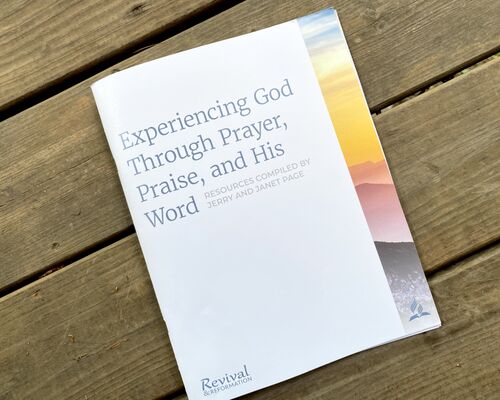
Experiencing God through Prayer and Praise - Newly Updated
This newly updated inspirational packet, compiled by Jerry and Janet Page, contains many resources on prayer including topics like: Praising God, abiding in Jesus’ love, guidelines for those desiring anointing, encouraging promises and quotes on healing, principles of intercessory prayer, how to pray with your spouse, powerful promises for parents, what to pray for non-Christians, when Satan called a worldwide meeting, and much more. (Download the entire packet or choose topics individually.)
Prayer

Promises to Claim for the Outpouring of the Holy Spirit
The following is a collection of Bible promises and Spirit of Prophecy quotes that we can claim as we pray for a deeper outpouring of the Holy Spirit in our lives and church. God is faithful. His Word does not return unto Him void. Claim these promises! God will answer! In addition to this collection of quotes, we are also offering the free booklet "God Still Lives" for download. This book shows in living reality what Holy Spirit living looks like. We know you will be blessed! Dare to ask for more!
Revival

Revival NOW!
Revival NOW! is a definite "must read" for anyone hungering for revival! This popular booklet, compiled by Dan Augsburger, has already printed over 15,000 copies and has been shared worldwide. Topics covered include: God’s Wonderful Gift of Pardon and Righteousness, Being Transformed, Adopting Christ’s Lifestyle Of Obedience and Service, What Was/Is The Condition Of God’s People, God’s Remedy And The Pathway To Revival, and much more! (All 64 pages are pure gold!)